
monday service Singapore — AI Service Desk for IT, HR & Internal Teams
monday service in Singapore, configured by a certified monday.com partner in Singapore for IT, HR, procurement, and facilities teams handling more inbound requests than headcount.
- AI agents for routine requests — password resets, access, and policy questions resolved without a human touch
- Self-service portal with knowledge base — answers surfaced before the ticket is raised
- Multi-channel intake — portal, email, and chat requests landing in one queue with consistent fields
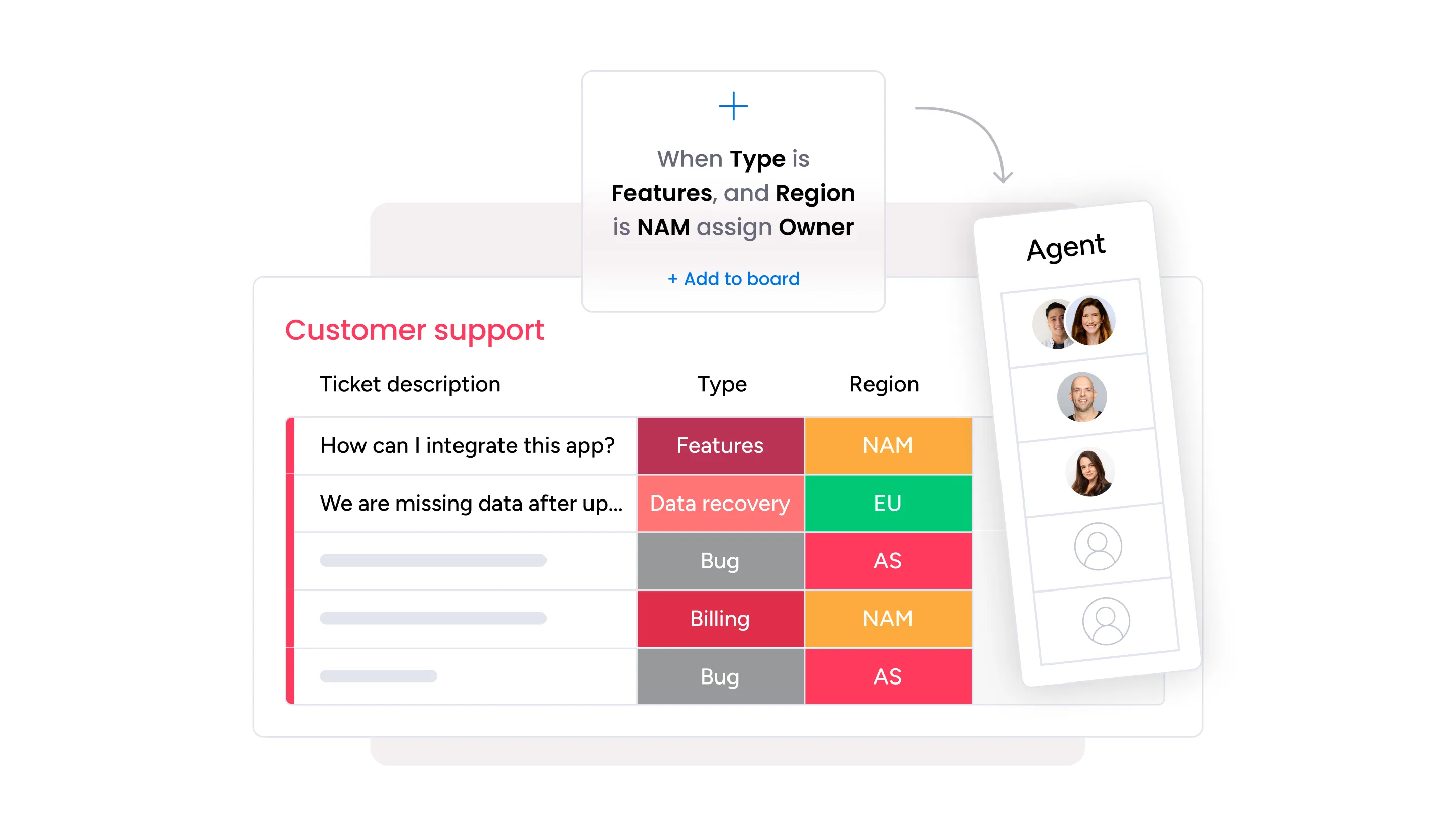
- Automated triage and routing — requests reach the right team by category and urgency, with no coordinator in the middle
- Separate queues and permissions per team — IT, HR, procurement, and facilities on one platform without seeing each other's cases
- SLA tracking and queue reporting — ageing, volume, and resolution times visible to team leads
What monday service Does That a Shared Inbox Cannot
Most internal service teams start with a shared inbox and a rota. It works until volume rises, and then the failure modes are all the same: two people reply to the same request, one sits untouched for a week, nobody can say how long anything actually takes, and the same five questions get answered from scratch every month.
A service desk fixes that by giving every request an owner, a status, and a clock. Requesters see where theirs stands without chasing. Team leads see queue depth and ageing rather than a feeling that things are busy.
The reporting is the part that changes decisions. When you can show that 40% of tickets are password resets, the case for automating them writes itself.
AI Agents That Resolve Tickets Without a Human
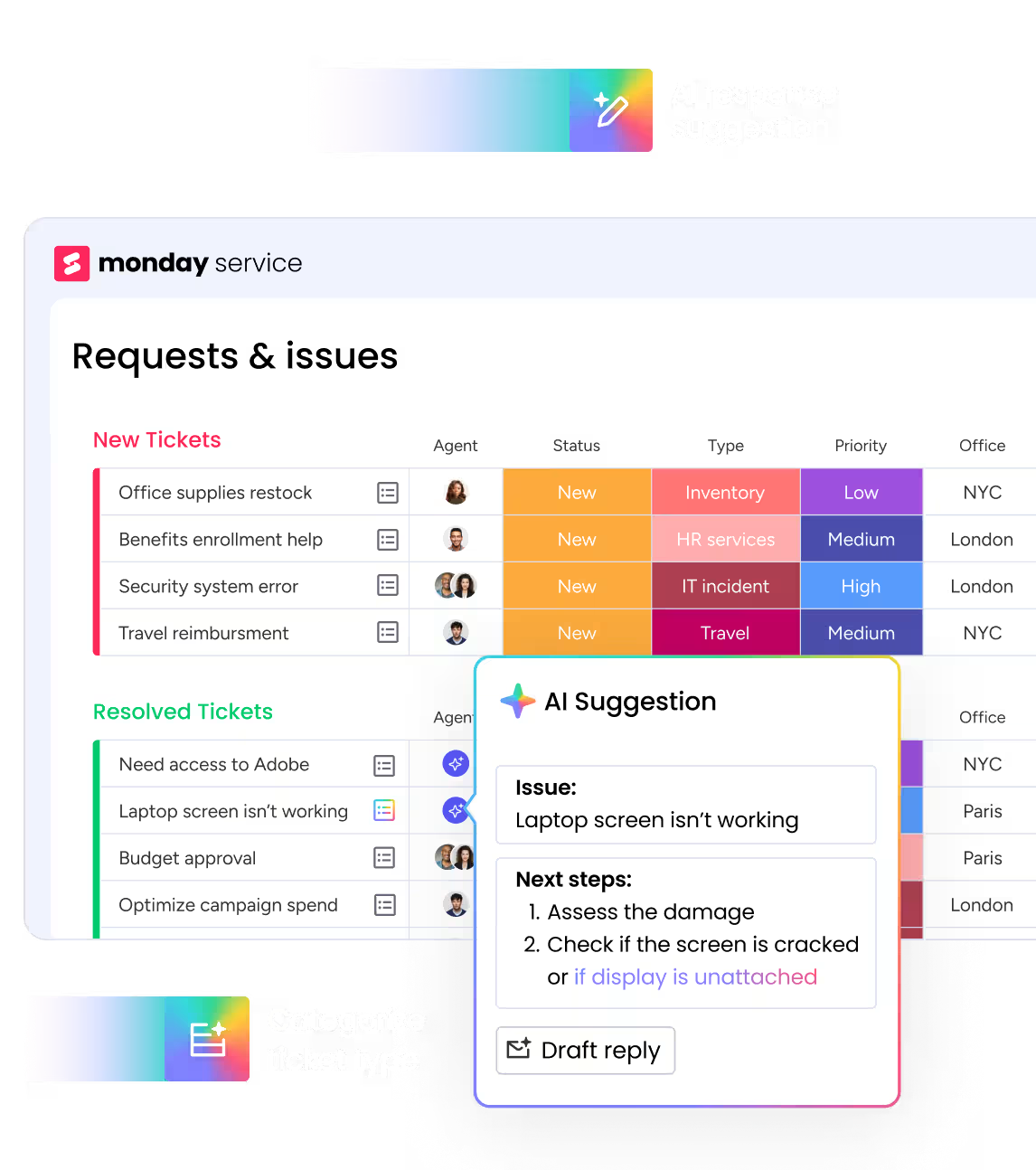
monday service ships with AI agents that handle routine requests end to end - reading the request, matching it against your documented answers, and resolving it without anyone picking it up.
This works well for high-volume, low-judgement requests: access provisioning, policy questions, status lookups, common troubleshooting. It works badly for anything ambiguous, sensitive, or novel, and the configuration that matters most is deciding where that line falls for your organisation.
We set escalation so an agent hands over with full context rather than dumping a frustrated requester back at the start. Nobody should have to re-explain their problem to a human after failing with a bot.
A Service Portal Your Employees Will Actually Use
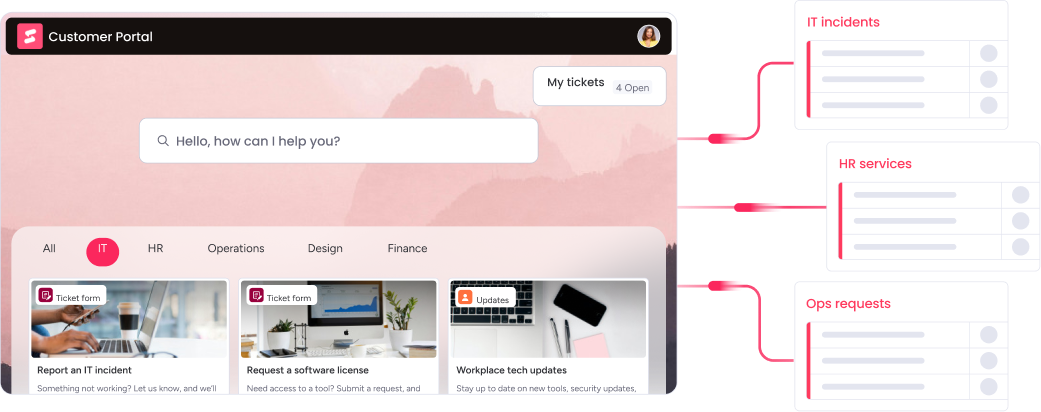
A portal only deflects tickets if people prefer it to messaging someone directly. That means one place to raise anything, forms short enough to finish, and a knowledge base that answers the question before the form is submitted.
We structure request types around what employees call things, not what your internal teams call them. "I can't log in" is a request type. "Identity and access management incident" is not, and a portal full of that language sends everyone straight back to Slack.
Requesters get status visibility on their own tickets, which removes the single largest source of follow-up messages: not knowing whether anything is happening.
Intake, Triage, and Routing Across IT, HR, and Procurement
Requests arrive from everywhere; portal, email, chat and land in one queue with consistent fields regardless of channel. From there, routing sends each to the right team by category, urgency, or requester attributes, without a coordinator reading and forwarding.
Multiple teams can run on the same platform with separate queues and separate permissions. IT does not see HR's sensitive cases; HR does not wade through laptop requests. What they share is a common intake experience for the employee, who should not need to know which department owns their problem.
SLAs and priority rules are configured per team, because a payroll error and a broken monitor do not deserve the same clock.
Rolling Out Service Management Without Losing Control
Service desk rollouts fail in a specific way: the process gets designed for the edge cases, ends up with nine priority levels and a twelve-field form, and the team quietly reverts to email within a month.
We start with one team and the request types that make up most of the volume. Categories get added once the data shows they are needed, not in anticipation. That keeps intake fast enough that using the portal is easier than sending a message.
AI agents come after the human process is stable. Automating a workflow you have not yet got right just produces wrong answers faster.
For the employee lifecycle side; onboarding, leave, reviews → see HR workspaces for the employee lifecycle.
Not sure which applies, or think it is more than one? That is the normal case. Book a discovery call with our consultants to review your current workflows, identify quick wins, and get a tailored Monday.com implementation roadmap for your organisation.

Product Line Expertise
A channel partner undergoes rigorous training and testing to receive a product line certification.
CADIT is proud to provide certified service to our customers in 5 Ansys Product Line Categories.
We provide several subsidized specialty training options & quality service for customers under our care.
